Your Guide to Sciatica Pain Treatment Options in Green Bay
If you’re struggling with the searing, relentless pain of sciatica, you already know how it can bring your life to a grinding halt. Finding the right path back to pain-free movement can feel overwhelming, but effective sciatica pain treatment options are closer than you think. They range from simple strategies you can start at home to advanced, non-surgical therapies that get to the root of the problem right here in our Green Bay clinic.
At Cornerstone Chiropractic, we understand the frustration and pain that sciatica causes. Our goal is to be your trusted local provider, helping you find lasting relief so you can get back to your life.
Finding Lasting Sciatica Relief in Green Bay
Living with sciatica is a frustrating and often lonely experience. That unique pain—a sharp, shooting, or burning sensation that travels from your lower back, through your glute, and down your leg—can make sitting, standing, or even walking feel like an impossible task. Too many people in our Green Bay community just accept it as a part of life, but it absolutely doesn’t have to be.
At Cornerstone Chiropractic, we’ve found that the first step to beating the pain is understanding it. When you know what’s causing the problem, you’re empowered to find the right solution. This guide is your roadmap. We’re going to break down what sciatica really is, why it happens, and walk through the full spectrum of care available to you from a trusted sciatica chiropractor in Green Bay, WI.
Your Path to a Pain-Free Life
Our mission is to help you move from simply identifying the problem to implementing a solution that actually works for good. To make this journey clearer, we’ve mapped out the typical path to sciatica relief.

As you can see, the journey always starts with a thorough assessment to pinpoint the real cause. Only then can we build a targeted treatment plan designed for your specific situation. This guide is an in-depth tour of that entire process, backed by the experience of Dr. Bill Binsfeld and our dedicated Green Bay team.
Sciatica isn’t a diagnosis—it’s a symptom. It signals an underlying issue, usually a herniated disc, spinal misalignment, or muscle imbalance that’s pinching the sciatic nerve. Truly effective treatment has to fix the source of that compression, not just numb the pain.
We’ll cover everything from at-home care you can start today to the advanced chiropractic treatments we use right here in our Green Bay clinic. You’ll learn about conservative approaches, their pros and cons, and why our patient-first approach is so often the key to avoiding more invasive procedures.
Your journey to moving and living without pain starts right here.
Understanding What’s Really Causing Your Sciatica
That sharp, shooting pain down your leg isn’t a disease in itself—it’s a symptom. The medical term for it is radiculopathy, but think of it as a loud, persistent alarm bell. It’s your body’s way of screaming that something is irritating or compressing the sciatic nerve.
This nerve is the longest and thickest in your entire body, like a major electrical cable running from your lower back, through your hips and buttocks, and all the way down each leg. When something creates a roadblock along this nerve highway, it causes a traffic jam of pain signals.
The root of the problem is always this compression. Your body sends out pain, numbness, tingling, or weakness to tell you the nerve is in trouble. Figuring out what’s causing that “roadblock” is the single most important step toward finding the right sciatica pain treatment options and becoming an active partner in your own recovery.
The Most Common Roadblocks for the Sciatic Nerve
While a lot of things can cause sciatica, a few key culprits are behind the vast majority of cases we see here in our Green Bay clinic. Each one puts pressure on the nerve in a slightly different way.
- Lumbar Disc Herniation: This is the big one, responsible for up to 90% of all sciatica cases. Imagine your spinal discs are like little jelly donuts sitting between your vertebrae. A herniation happens when the tough outer layer tears, letting the soft, jelly-like center bulge or leak out. This material then presses directly on a sciatic nerve root, and the pain begins. This can happen from a sudden auto injury, years of repetitive strain, or just the natural aging process.
- Spinal Stenosis: This condition is a gradual narrowing of the spinal canal—the very tunnel your spinal cord and nerve roots travel through. It’s like a tunnel slowly getting smaller over time, eventually pinching the nerves inside. Stenosis is most often a result of age-related changes, like the growth of bone spurs or the thickening of spinal ligaments.
Key Insight: Sciatica almost always feels like a leg problem, but the source of that problem is nearly always in your lower back. This is why effective treatment has to focus on fixing the spinal issue that’s causing the nerve compression, not just chasing the leg pain.
Other Potential Causes of Sciatic Nerve Pain
Though less common, a few other conditions can also put the squeeze on the sciatic nerve and create sciatica-like symptoms. A thorough diagnosis is absolutely critical to rule these out and make sure your treatment plan is hitting the right target.
- Degenerative Disc Disease: As we get older, our spinal discs naturally lose some of their height and water content. They get thinner and less spongy. This can cause the vertebrae to sit closer together, narrowing the space where the nerves exit the spine and leading to irritation.
- Spondylolisthesis: This condition occurs when one vertebra slips forward over the one below it. This misalignment can directly pinch the nerve root as it leaves the spine, setting off a cascade of sciatic pain.
- Piriformis Syndrome: The piriformis is a small muscle located deep in your buttock. For about 15% of the population, the sciatic nerve runs directly through this muscle instead of underneath it. If the piriformis muscle gets tight or goes into spasm, it can squeeze the nerve like a clamp, causing sciatica-like symptoms even when there’s nothing wrong with the spine itself.
Here at Cornerstone Chiropractic, our first and most important job is to perform a detailed examination to identify exactly which of these issues is at the root of your pain. By pinpointing the true source, Dr. Bill Binsfeld can create a targeted, effective plan to relieve the pressure and help you find lasting relief.
Effective At-Home Sciatica Pain Treatments
When that searing, electric pain of sciatica flares up, it’s easy to feel helpless. But you have more control than you think. While getting to the root of the problem requires professional care, there are several powerful strategies you can use at home to turn down the volume on your pain.
These simple, safe methods are your first line of defense. Think of them as calming the storm while your body gets the support it needs to truly heal. They can reduce inflammation and ease muscle tension, making it possible to function while you work toward a long-term solution.
Strategic Use of Ice and Heat Therapy
One of the oldest tricks in the book is also one of the most effective: the strategic use of cold and heat. Knowing which one to use—and when—can make a world of difference.
- Ice for the First 48-72 Hours: In the beginning, your enemy is inflammation. When the pain is fresh and sharp, grab a cold pack (wrapped in a thin towel, of course) and apply it to the painful spot on your lower back for 15-20 minutes at a time. This constricts the blood vessels, which helps numb the area and reduce the swelling that’s putting pressure on your sciatic nerve.
- Heat After the Initial Flare-Up: After a couple of days, it’s time to switch gears. A heating pad or a warm compress can now be your best friend. Applying heat helps relax the painfully tight muscles that are likely spasming around the irritated nerve. It also boosts blood flow, bringing a fresh supply of oxygen and nutrients to the area to kickstart the healing process.
Patient Tip: Never put ice or heat directly on your skin, and please, don’t fall asleep with a heating pad on. The goal is gentle relief, not adding a burn to your troubles. For a deeper dive, check out our guide on how to relieve lower back pain naturally.
Gentle Stretches to Relieve Nerve Pressure
I know it sounds completely backward, but when you’re in pain, gentle movement is often far better than strict bed rest. The right stretches can create just enough space around the sciatic nerve to ease that compression and dial down the pain. The golden rule? Move slowly, breathe deeply, and back off immediately if you feel any sharp pain.
- Knee-to-Chest Stretch: Lie on your back, knees bent, with your feet flat on the floor. Gently bring one knee up toward your chest, holding it there for 20-30 seconds. You should feel a nice, gentle stretch in your lower back.
- Piriformis Stretch: This one is a game-changer. Lying on your back, cross the ankle of your painful leg over your opposite knee, making a “figure four” shape. Now, gently pull the bottom thigh toward you until you feel a good stretch deep in your buttock. The piriformis muscle is a notorious culprit in sciatica, and this stretch targets it directly.
- Cat-Cow Pose: Get on your hands and knees. As you breathe in, let your belly drop toward the floor and look up. As you breathe out, round your spine up toward the ceiling and tuck your chin. This simple movement gets your spine moving, which can help reduce nerve tension.
Try to work these in once or twice a day. Your body will thank you for it. Just remember to listen to it—if a movement hurts, stop.

The Role of Over-the-Counter Medications
It’s completely understandable to reach for an over-the-counter (OTC) anti-inflammatory like ibuprofen or naproxen. In the short term, these can be a useful tool. By taming inflammation, they can take the edge off the pain enough to let you get through your day.
But it’s critical to see these medications for what they are: a temporary fix. They mask the symptoms, but they do absolutely nothing to correct the underlying structural problem causing the sciatica in the first place.
Relying on them long-term is like taking the batteries out of a smoke alarm because you don’t like the noise—the fire is still burning. These pills are a bridge, not a destination. They can help you feel better while you seek professional care from a chiropractor in Green Bay who can get to the root of the problem and fix it for good.
Chiropractic Care: The Foundation for Sciatica Relief
While stretches and heat packs can offer a bit of temporary relief, they’re often like putting a bucket under a leaky roof—it helps in the moment, but it doesn’t fix the hole. For lasting relief from sciatica, you have to address the structural problem causing the nerve irritation in the first place. This is where chiropractic care really makes a difference, offering a powerful, non-surgical way to get to the root of the problem.
At Cornerstone Chiropractic, our entire approach is built on precision and finding the why behind your pain. Dr. Bill Binsfeld specializes in pinpointing and correcting the specific spinal misalignments, known as subluxations, that are putting pressure on your sciatic nerve. As the leading back pain chiropractor in Green Bay, we have helped countless patients find a solution.
How Chiropractic Adjustments Help Sciatica
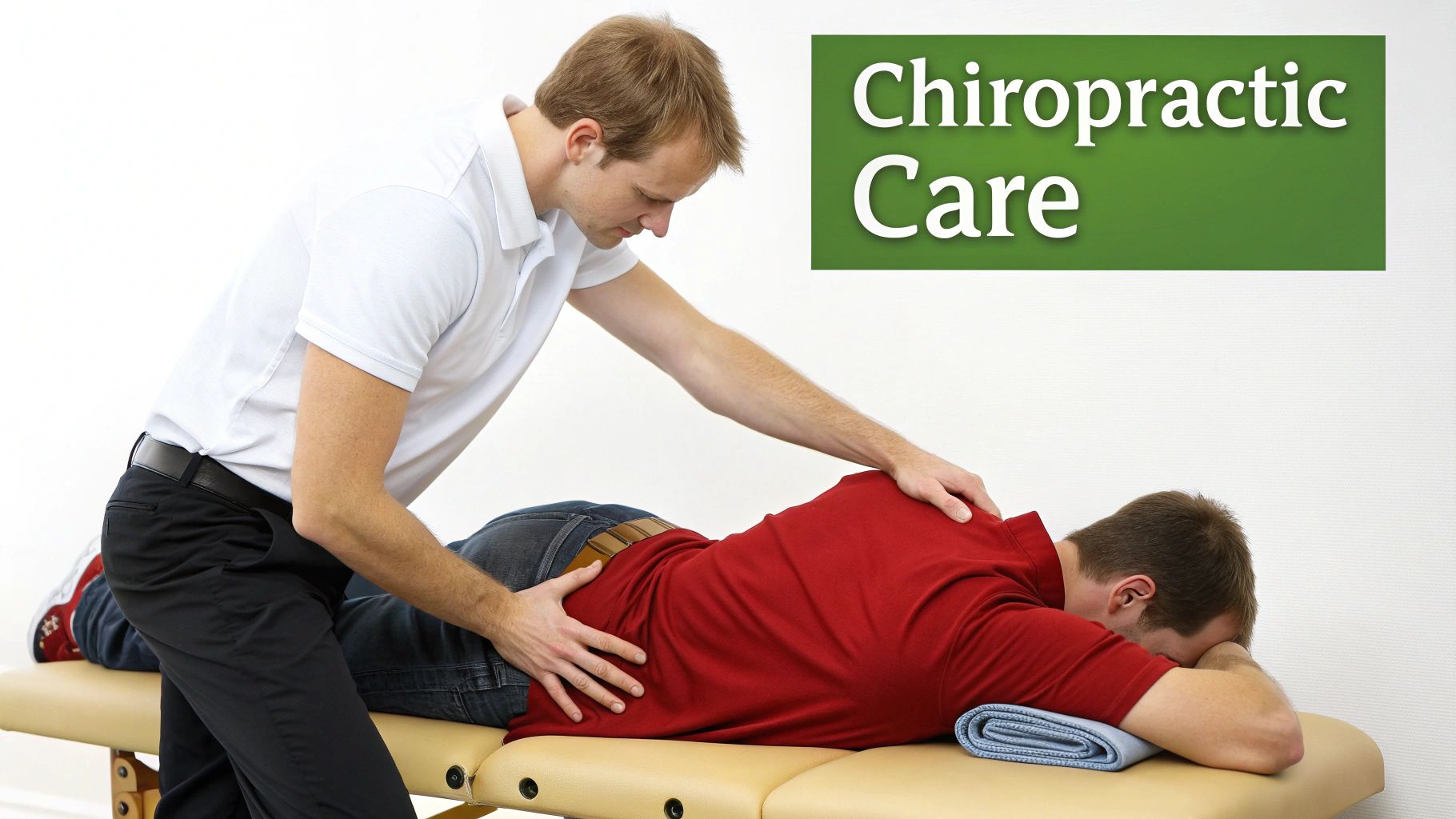
The core of chiropractic care is the spinal adjustment. Think of your spine as a series of moving parts in a machine. If one of those parts gets stuck or knocked out of alignment, the whole machine starts to grind and function poorly. An adjustment is simply a gentle, specific force applied to those “stuck” joints to get them moving correctly again.
When Dr. Binsfeld performs an adjustment, several important things happen:
- Pressure Comes Off the Nerve: By correcting the misalignment, we immediately take direct pressure off that irritated sciatic nerve root.
- Inflammation Calms Down: Restoring proper motion helps reduce local inflammation, which soothes the nerve and the tissues around it.
- Mobility Returns: A properly aligned spine moves the way it’s supposed to, which helps break the cycle of muscle guarding and stiffness that always comes with sciatica.
This isn’t just about turning down the pain signals; it’s about creating the right environment for your body to finally start healing itself. To get a better sense of our methods, you can learn more about our chiropractic care for back pain in Green Bay.
By focusing on the cause instead of just the symptoms, chiropractic care helps build a solid foundation for long-term spinal health. It’s not about managing the problem—it’s about fixing it so future flare-ups are far less likely.
Advanced Therapies for More Complex Cases
For some of our patients here in Green Bay, sciatica is caused by more complex issues like a herniated or bulging disc. In these situations, we have advanced therapies that work perfectly alongside chiropractic adjustments to provide powerful, targeted relief without drugs or surgery.
One of our most effective tools is Spinal Decompression. This therapy uses a specialized table that gently and rhythmically stretches the spine. This creates a subtle vacuum effect inside the disc, which can help pull the bulging material back into place and away from the sciatic nerve. Decompression also helps draw water, oxygen, and nutrients into the disc to kickstart the natural healing process.
Another incredible option we offer is SoftWave Therapy. This innovative treatment uses unfocused shockwaves to stimulate your body’s own healing and regenerative abilities right at the cellular level. It’s fantastic for reducing inflammation, improving blood flow, and speeding up tissue repair in the damaged areas of the lower back. It gives your body another powerful, non-invasive tool to support recovery.
The Benefits of a Chiropractic-First Approach
The demand for effective, non-invasive options for sciatica is growing fast. People are desperately seeking safer alternatives to long-term medication use. This trend underscores the growing need for treatments like the ones we offer at Cornerstone Chiropractic in Green Bay—from chiropractic adjustments to SoftWave Therapy and spinal decompression. A personalized plan at our clinic is designed to do more than just get you out of pain. The benefits of chiropractic care for sciatica include:
- Pain Relief: Directly addresses the nerve compression causing your pain.
- Improved Mobility: Restores proper spinal movement and flexibility.
- Reduced Inflammation: Calms irritated nerves and tissues naturally.
- Long-Term Health: Corrects the root cause to prevent future flare-ups.
By combining precise adjustments with these advanced therapies, Dr. Bill Binsfeld helps restore your body’s natural function, gets you moving again, and gives you the tools to build a healthier, more resilient spine for years to come.
Other Medical Sciatica Treatment Options
When it comes to treating sciatica, you have options. While our approach at Cornerstone Chiropractic is always to start with conservative, non-invasive care that gets to the root cause of the problem, we want our Green Bay patients to understand the entire landscape of care. Knowing what’s out there helps you make confident, informed decisions about your health.
Other medical treatments range from exercises and injections to major surgery, and each has its place. By looking at them honestly, we can show you why starting with a foundational, chiropractic-first approach is so often the smartest and safest path to lasting relief.
Physical Therapy and Core Strengthening
Physical therapy (PT) is a common and often helpful part of recovering from sciatica. A physical therapist will walk you through specific exercises designed to beef up the muscles supporting your spine, especially in your core and lower back. The idea is to build a stronger, more stable foundation to take the pressure off your spinal discs and nerves.
A typical PT program for sciatica might include:
- Glute Bridges to fire up the muscles that help support your low back.
- Bird-Dog Exercises to build core stability and balance without putting stress on the spine.
- Clamshells to activate your hip muscles, which improves pelvic stability.
While PT is fantastic for rebuilding strength, it delivers the best results after the underlying structural problem—the spinal misalignment or disc bulge pinching the nerve—has been addressed first through chiropractic care.
Epidural Steroid Injections
When sciatica is severe and isn’t responding to initial conservative care, some doctors might suggest an epidural steroid injection (ESI). This procedure involves injecting a powerful anti-inflammatory medication directly into the space around the irritated sciatic nerve root.
The main goal here is to get fast, short-term pain relief by calming down that intense inflammation. And while some people do experience significant temporary relief, it’s crucial to understand the limitations.
Injections are a tool for managing symptoms, not a long-term fix. They don’t correct the mechanical problem causing the nerve compression in the first place, which means the pain usually comes back once the medication wears off.
This trend toward managing symptoms with medication aligns with what we see in the market. You can read more about sciatica treatment market trends on globenewswire.com. At Cornerstone Chiropractic, we focus instead on correcting the root cause with treatments like spinal decompression and SoftWave Therapy.
When Is Surgery Considered a Necessary Step?
Surgery is almost always a last resort for sciatica. It’s typically only considered after extensive conservative treatments have failed to bring relief. It’s generally reserved for severe cases that involve:
- Significant or worsening muscle weakness in the leg.
- Loss of bowel or bladder control (which is a medical emergency).
- Pain so debilitating that it severely impacts your quality of life.
The most common surgery for sciatica caused by a herniated disc is a microdiscectomy. In this minimally invasive procedure, a surgeon removes the tiny piece of the disc that is pressing on the nerve. In our experience, many patients find that combining chiropractic adjustments with non-surgical spinal decompression is the best treatment for a disc injury without having to go under the knife.
Here at Cornerstone Chiropractic, our goal is to help our Green Bay neighbors avoid these more aggressive interventions whenever we can. By focusing on restoring proper spinal function first, we give your body the best possible chance to heal itself, naturally.
What to Expect on Your Visit to Our Green Bay Clinic
Taking that first step to address your sciatica can feel like a huge hurdle, especially when you’re hurting. We get it. That’s why we’ve designed your initial visit to our Green Bay clinic to be clear, comfortable, and completely focused on you.
From the moment you walk into Cornerstone Chiropractic at 2765 S Oneida St, our mission is to replace the uncertainty you’re feeling with a solid plan. You’ll leave knowing exactly what’s causing your pain, how we can help, and what the road to recovery looks like. No surprises, just answers.
Your Comprehensive Consultation
Your visit starts with a one-on-one conversation with Dr. Bill Binsfeld. This isn’t just a quick meet-and-greet; it’s a dedicated listening session. Dr. Binsfeld will take the time to hear your whole story—when the pain started, what it feels like, what makes it worse, and how it’s messing with your daily life here in Green Bay.
This conversation is a crucial first step. Understanding your health history and the unique details of your symptoms helps us connect the dots and start building an accurate picture of what’s really going on. We want you to ask questions. The more you know, the better we can work together.
A Detailed Physical Examination
After the consultation, Dr. Binsfeld will perform a thorough physical and neurological exam. This is a hands-on process designed to pinpoint the precise source of your sciatic nerve compression.
This isn’t a generic check-up. The exam will likely include:
- Postural Analysis: We’ll look at how your body’s alignment might be contributing to the problem.
- Range of Motion Tests: Assessing how well your spine and hips are moving is key to understanding the functional limitations.
- Orthopedic and Neurological Checks: We’ll test your reflexes, muscle strength, and sensation to figure out the degree of nerve involvement.
This detailed assessment lets us confirm the root cause of your sciatica, whether it’s a herniated disc, a spinal misalignment, or something else entirely.
Creating Your Personalized Treatment Plan
Once Dr. Binsfeld has a clear diagnosis, he’ll create a treatment plan specifically for you. We’ll sit down and walk you through the findings in simple, easy-to-understand terms and explain our recommendations. Your plan might include chiropractic adjustments, spinal decompression, SoftWave Therapy, or a mix of therapies.
We believe you should be an active partner in your recovery. Your treatment plan will include a clear timeline, transparent costs, and defined goals, so you always know what to expect and what we’re working toward together.
Here at Cornerstone Chiropractic, we help Green Bay patients navigate their insurance benefits. We are in-network with many plans and will verify your benefits to make getting effective care as simple as possible.
Your Sciatica Questions, Answered
Even after exploring all the different paths to relief, it’s completely normal to have a few more questions before you decide to take the next step. We get it. Over the years, we’ve heard just about every question you can imagine from our patients here in Green Bay. We’ve put together the most common ones to give you the clear, straightforward answers you’re looking for.
Our goal is simple: to make sure you feel confident and fully informed as you start your journey back to a pain-free life.

How Long Does Chiropractic Care Take to Relieve Sciatica?
Honestly, every person’s recovery timeline is unique. It really depends on the root cause of your sciatica and how severe it is. Many of our patients at the Green Bay clinic report feeling some relief after just their first few adjustments. If it’s a newer, more acute issue, we often see significant improvement within a couple of weeks.
However, a chronic condition that’s been around for months or even years—like a severe disc herniation—is going to require a more dedicated treatment plan. During your initial consultation, Dr. Binsfeld will give you a realistic timeline based on your specific diagnosis and what he finds during your exam.
Is Chiropractic Treatment for Sciatica Painful?
This is a big one, and the answer is that chiropractic adjustments are generally not painful at all. In fact, what most people feel is a sense of release and relief as pressure comes off the joint. That “popping” or cracking sound you might hear is just the release of gas from the spinal joints, no different than when you crack your knuckles.
It’s possible you might feel some mild soreness afterward, similar to how you’d feel after trying a new workout. This is your body adapting to its new, healthier alignment, and it’s completely normal and temporary. We always prioritize your comfort and use gentle, precise techniques.
Our Promise: We communicate with you every step of the way to ensure your treatment is as comfortable as it is effective. Your well-being is our top priority.
Will My Insurance Cover Sciatica Treatment in Green Bay?
Most major insurance plans do offer coverage for chiropractic care, particularly for a well-documented condition like sciatica. Here at Cornerstone Chiropractic, we are in-network with many providers to make care as accessible and affordable as possible for our Green Bay community.
Our amazing staff is more than happy to verify your specific benefits for you before your first visit. That way, you’ll have a clear and complete picture of your coverage from the very beginning. We also offer a new patient special and have flexible payment options available to ensure nothing stands in the way of you getting the relief you need.
Can Sciatica Go Away on Its Own?
While a very mild case of sciatica might seem to get better with a few days of rest, the underlying problem—like a herniated disc or a spinal misalignment—is often still there. When the root cause isn’t addressed, the pain is very likely to come back, and it could be even worse the next time.
Seeking professional care ensures that the source of your nerve compression is properly diagnosed and corrected. This approach doesn’t just relieve the pain you’re feeling now; it helps prevent future flare-ups and promotes true, long-term spinal health.
Ready to finally get to the root of your sciatica and start your journey toward lasting relief? The team at Cornerstone Chiropractic is here to help our Green Bay neighbors move better, feel better, and live pain-free. Schedule your consultation with Dr. Bill Binsfeld today and find out how our personalized care can make all the difference.