How to Relieve Neck Pain: Proven Methods for Lasting Comfort
When that familiar ache settles into your neck, the only thing on your mind is how to relieve neck pain. The good news is that you can often start finding relief with simple steps at home.
It all begins with listening to your body. That stiffness or shooting pain is a signal that something is out of balance. Maybe you slept in an awkward position, spent hours hunched over a laptop, or are carrying the stress of a busy week in your shoulders. Whatever the cause, you have the power to take control and find relief.
You’re certainly not alone in this. Neck pain is a major global issue, ranking second only to low back pain in musculoskeletal disability. It’s responsible for an incredible 22 million Years Lived with Disability (YLDs) worldwide, and those numbers are expected to grow. Understanding how to manage it is more important than ever. You can explore the global burden of neck pain in more detail to see just how widespread this problem is.
Heat or Cold Therapy: Which Is Better?
One of the first questions patients ask is whether to use an ice pack or a heating pad. The answer depends on why your neck hurts.
- Cold Therapy (Ice): Use ice for new injuries—the kind that just happened. If you strained a muscle lifting something heavy, a cold pack is best for the first 24-48 hours. The cold helps reduce swelling and inflammation, which can numb that initial sharp pain.
- Heat Therapy (Moist Heat): For chronic, nagging stiffness or muscle tightness that isn’t from a recent injury, heat is your best friend. A warm, damp towel or a heating pad boosts blood flow to the area, helping to relax tense, knotted muscles and soothe the ache.
Pro Tip: Never place ice or heat directly on your skin. Always wrap the pack in a thin towel to prevent burns, and limit each session to about 15-20 minutes.
The Overlooked Power of Hydration
It sounds almost too simple, but staying hydrated is crucial for a healthy spine. The discs between your vertebrae—your body’s natural shock absorbers—are filled with a gel-like substance that is mostly water.
When you’re dehydrated, these discs can lose some of their cushioning. This can lead to more friction between the bones in your neck, causing irritation and pain. Drinking plenty of water throughout the day helps keep those discs plump and flexible, supporting your neck’s natural curve. Think of it as lubrication for your spine.
Matching Your Pain to a Quick Solution
Understanding what’s triggering your neck pain helps you choose the right immediate action. A quick fix for “tech neck” from your computer won’t be the same as for waking up with a kink in your neck.
To make it easy, we’ve created this quick-reference table. It connects common daily triggers with simple relief strategies you can use right away.
Common Neck Pain Triggers and Quick Relief Actions
| Common Trigger | What It Feels Like | Your Quick-Relief Action |
|---|---|---|
| “Tech Neck” | A dull, persistent ache at the base of your neck and across your shoulders. | Apply moist heat for 15 minutes to relax the strained muscles. Then, stand up and do a few gentle shoulder rolls. |
| Awkward Sleeping Position | Sharp, localized pain and stiffness that makes turning your head difficult. | Use a cold pack for 15 minutes to reduce inflammation. Avoid stretching forcefully; focus on gentle, slow movements. |
| Stress-Related Tension | A tight, constricting feeling, often accompanied by tension headaches. | Take five minutes for deep breathing exercises while applying a warm compress to your neck and shoulders. |
These first steps are designed to give you some immediate comfort and set the stage for lasting relief.
However, if your pain is severe, doesn’t improve, or is accompanied by other symptoms like numbness or weakness, it’s a sign that you need a professional evaluation. A chiropractor in Green Bay, WI, can help determine the root cause of your discomfort and create a personalized plan to help you feel your best.
Gentle Stretches and Exercises to Restore Mobility
When your neck is stiff and aching, moving it around might be the last thing you want to do. Your instinct might be to keep it still, hoping the pain will fade. But in many cases, gentle, controlled movement is exactly what your body needs to begin healing.
The goal isn’t to push through pain. Think of these movements as a way to support your body’s recovery. Gentle stretching brings fresh blood flow to tight muscles, delivering the oxygen and nutrients they need to repair themselves. It also helps lengthen muscle fibers that have become short and strained from stress or poor posture. Over time, these small, consistent movements can restore your neck’s natural range of motion and help prevent future stiffness.
Before you start, remember this simple flow: hydrate, apply heat or cold, and then gently move. It’s a foundational approach to get things started.
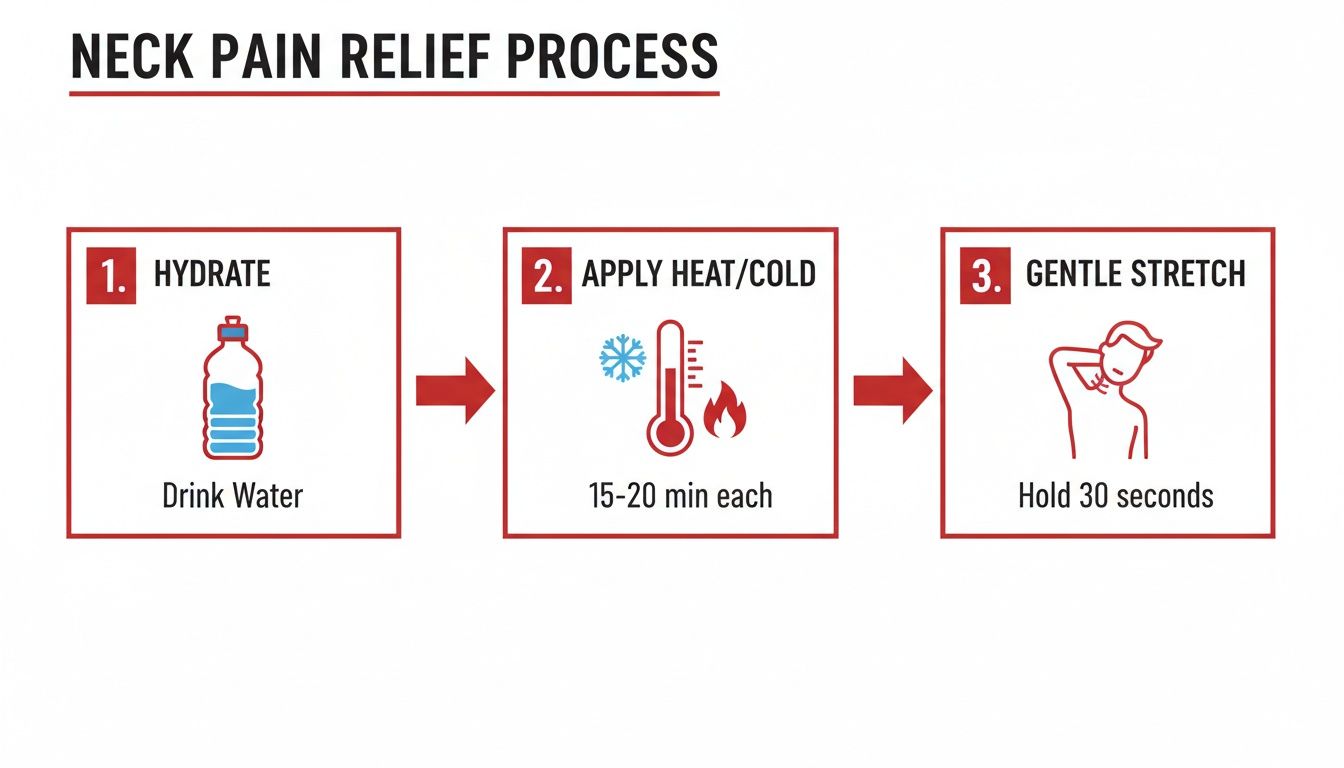
This visual reminds us that lasting neck pain relief often involves multiple steps. Stretching is a key part, but it works best when supported by other self-care basics.
The Power of Slow and Controlled Movements
The secret to effective stretching is to be deliberate. Avoid fast, jerky motions, which can cause your muscles to tighten up even more.
Every stretch should be done slowly, without any bouncing. You’re looking for a gentle pull, never a sharp pain.
Important Safety Note: Always listen to your body. If any movement causes sharp pain, numbness, or a tingling sensation down your arm, stop immediately. These could be signs of a more serious issue that needs a professional diagnosis from a chiropractor in Green Bay, WI.
Foundational Neck Stretches for Daily Relief
Here are a few simple, effective movements you can do almost anywhere—at your desk, in the kitchen, or while winding down for the night. Remember to breathe deeply and evenly through each one.
1. The Chin Tuck for Posture Correction
This movement is excellent for counteracting “tech neck.” It strengthens the deep muscles in the front of your neck that can become weak from looking down at screens.
- Start by sitting or standing up straight, with your shoulders relaxed.
- Look straight ahead. Gently glide your chin backward, as if you’re making a double chin.
- You should feel a gentle stretch at the back of your neck, near the base of your skull.
- Hold for 5 seconds, then slowly release. Aim to repeat this 5-10 times.
2. The Upper Trapezius Stretch
This stretch targets the large muscle that runs from your skull down to your shoulder—a common spot for tension.
- Sit in a chair and gently hold the side of the seat with your right hand to keep your shoulder down.
- Slowly tilt your left ear toward your left shoulder until you feel a gentle stretch along the right side of your neck.
- To deepen the stretch slightly, you can place your left hand on top of your head and apply very light pressure. Do not force it.
- Hold for 20-30 seconds while breathing.
- Slowly return your head to the center and switch sides.
3. Corner Pectoral Stretch
Often, neck pain is related to tightness in other areas. Tight chest muscles can pull your shoulders forward, putting extra strain on your neck and upper back.
- Find a corner in a room. Place your forearms on each wall, with your elbows slightly below shoulder height.
- Gently lean your body forward until you feel a good stretch across your chest and the front of your shoulders.
- Keep your neck in a neutral position, looking straight ahead.
- Hold for 30 seconds, then gently push back to release.
Consistency is more important than intensity. Doing these simple exercises for a few minutes each day can make a significant difference in managing stiffness and preventing neck pain from becoming a chronic issue.
If your mobility is severely limited or these stretches don’t provide relief, it may indicate an underlying joint restriction that a chiropractor can expertly evaluate and address.
Creating a Neck-Friendly Environment at Home and Work
While stretches and self-care are helpful, they often address the symptoms rather than the source of the problem. Lasting comfort comes from addressing the root cause—which is often found in our daily environments.
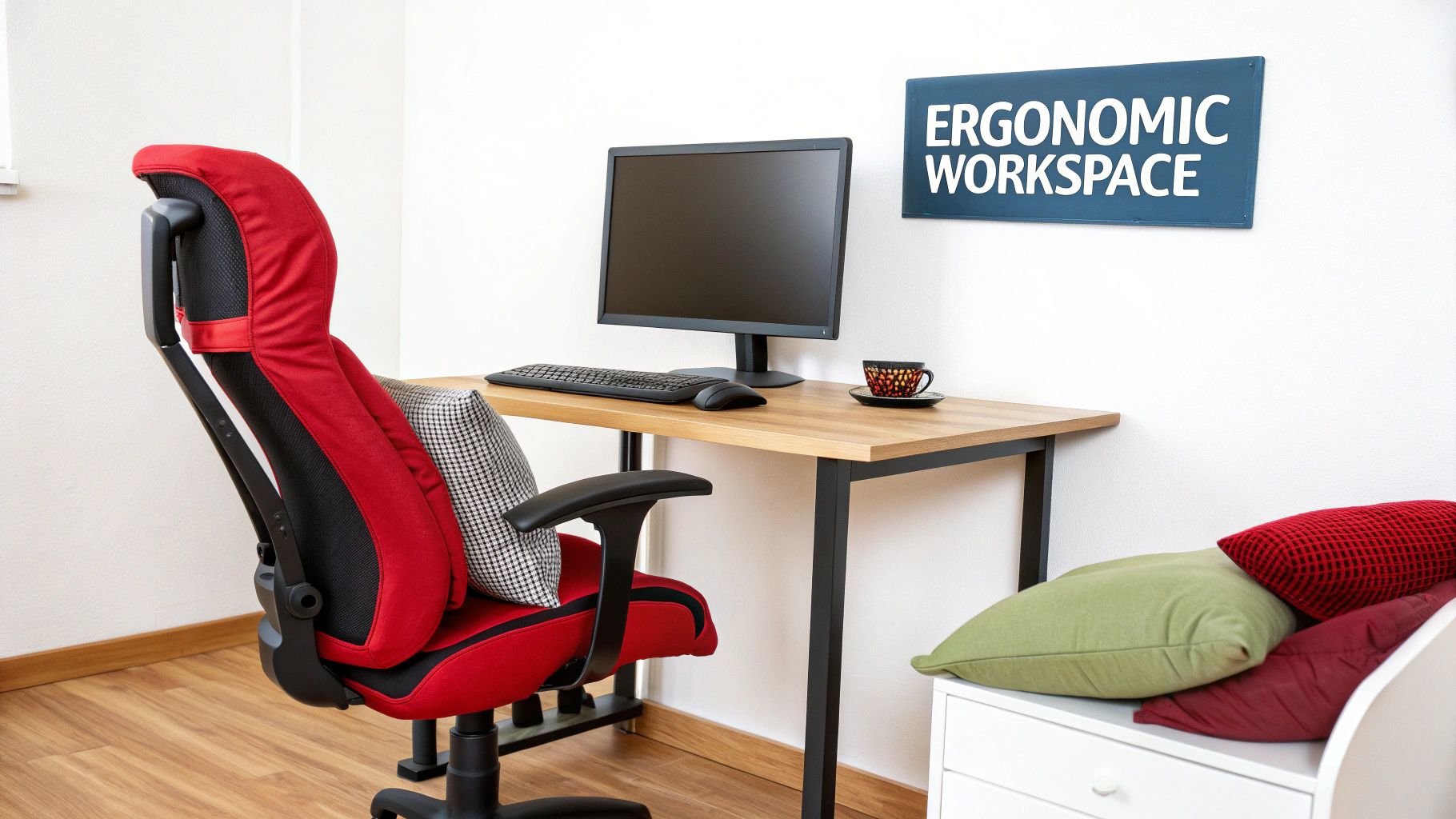
Your desk, your car, and even your bed can create small, consistent stressors that contribute to chronic neck pain. Fortunately, a few simple adjustments can make a big difference. This isn’t about buying all new furniture; it’s about making your current environment work for you.
This is not a minor issue. Globally, neck pain is a massive problem, affecting 206 million people in 2021 alone and showing a steady climb since 1990. In high-income areas like North America, the rates are particularly high, often linked to sedentary jobs that promote poor posture.
By optimizing your daily spaces, you’re taking a proactive step to protect your health. You can read more about the global impact of neck pain to understand the scope of this issue.
Your Quick Workstation Ergonomics Checklist
For anyone with a desk job, your workstation is a primary source of neck strain. Hours spent with your head tilted forward can put significant pressure on your cervical spine. Here’s a simple checklist to create a pain-free setup.
- Monitor at Eye Level: Your screen should be directly in front of you, with the top third of the monitor at or just below eye level. If it’s too low, you’re forced into that “tech neck” posture. Use a monitor stand or a sturdy stack of books to adjust it.
- Chair Position is Key: Adjust your chair so your feet are flat on the floor and your knees are at a comfortable 90-degree angle. Your lower back should feel supported. If there’s a gap, a small rolled-up towel or lumbar pillow can help.
- Keyboard and Mouse Placement: Keep your keyboard and mouse close enough that your elbows can stay relaxed by your side, bent at about a 90-degree angle. Reaching forward strains your shoulders and neck.
Many people work for hours with a laptop flat on their desk, which forces the head into a downward angle. A simple fix is using an external keyboard and mouse. This allows you to elevate the laptop screen to the proper eye level.
Optimizing Your Green Bay Commute
Your car can be another source of neck strain, especially during the daily commute around Green Bay. Road vibrations and a fixed seating position can fatigue your neck muscles.
Your headrest is a critical safety feature designed to prevent whiplash. Adjust it so the middle of the headrest is level with the top of your ears and about two inches from the back of your head. This provides optimal support without pushing your head forward.
Also, try adjusting your seat to be more upright. This encourages better posture and reduces the tendency to crane your neck forward.
The Role of Your Pillow and Sleep Position
You spend about a third of your life in bed, making your sleeping setup a critical factor for neck health. The wrong pillow can leave you waking up stiff and sore every morning.
The goal is simple: keep your neck in a neutral alignment with the rest of your spine.
- For Side Sleepers: A thicker, firmer pillow is needed to fill the space between your ear and the mattress. This prevents your head from dropping and straining the muscles on the side of your neck.
- For Back Sleepers: A thinner, contoured pillow is usually best. Look for one with a gentle curve that supports the natural arch of your neck while cradling your head. Avoid pillows so thick they push your chin toward your chest.
Stomach sleeping is the toughest position on your neck because it forces your head to be twisted to one side for hours. If this is your go-to position, we strongly encourage trying to train yourself to sleep on your back or side instead.
These environmental adjustments are powerful because they work passively. Once set up, they support your neck health 24/7. If you’ve made these changes and still struggle with persistent pain, it may be time for a professional evaluation. A chiropractor in Green Bay, WI, can identify underlying joint and muscle issues that ergonomics alone can’t fix.
When to Seek Professional Chiropractic Care
While the self-care strategies we’ve discussed are excellent for managing minor neck stiffness, they aren’t a cure-all. It’s important to recognize when you’ve reached the limit of at-home care and it’s time to see a professional. Ignoring persistent symptoms can turn a small issue into a larger problem.
Think of it this way: stretches and ergonomic adjustments are like basic maintenance for your body. But when a warning light comes on in your car, you don’t just hope it goes away—you take it to a mechanic. Your body deserves the same attention.
Red Flags That Require Immediate Attention
Certain symptoms are more than just a nuisance; they are clear signals from your body that something more serious may be happening. If you experience any of the following, it’s crucial to get a professional evaluation right away.
These are not “wait and see” symptoms. They often point to nerve involvement or significant structural problems that require an expert diagnosis.
- Numbness, Tingling, or Weakness: If your neck pain is accompanied by a pins-and-needles sensation, numbness, or a noticeable loss of strength that travels down your shoulder, into your arm, or to your hands, it could be a sign of nerve compression.
- Severe, Unrelenting Headaches: While many headaches are common, if you experience a sudden, severe headache that feels completely different from anything you’ve had before, it needs to be checked out immediately.
- Pain Following an Accident: Any neck pain that starts after a fall, sports injury, or car accident—even a minor one—should be evaluated by a professional to rule out whiplash or other hidden injuries.
- Fever or Unexplained Weight Loss: When neck pain is paired with symptoms like a fever, chills, or losing weight without trying, it could indicate an underlying infection or other medical condition that requires attention.
When Nagging Pain Becomes a Problem
Beyond those urgent red flags, there are common scenarios where at-home care just isn’t enough. These are the signs that it’s time to stop managing symptoms and start addressing the root cause.
The most common reason people finally seek care is when neck pain starts interfering with the things they love. Whether it’s turning your head to check traffic, enjoying a round of golf, or simply getting a good night’s sleep, persistent pain shouldn’t be your new normal.
It’s probably time to seek professional help if your neck pain:
- Lasts for more than a week: A simple strain should start to feel better within a few days. If the pain persists, something deeper is likely at play.
- Keeps coming back: If you find yourself dealing with the same stiff neck every few weeks or months, it often means an underlying issue with joint alignment or muscle imbalance isn’t being corrected.
- Limits your daily activities: If you have to hesitate before turning your head, picking up your kids, or joining in on your favorite hobbies, the pain is impacting your quality of life.
In these cases, the next logical step is to consult with a professional who specializes in the musculoskeletal system. Visiting a trusted chiropractor in Green Bay, WI, can provide a clear diagnosis and a targeted treatment plan. If you’re curious about this approach, you can learn more about why choosing chiropractic care is an effective option for lasting relief.
Chiropractic Treatments for Neck Pain in Green Bay
When you’ve tried stretches and ergonomic tweaks at home without finding lasting relief, it’s time to explore professional, evidence-based solutions. At our clinic, we focus on identifying and addressing the root cause of your neck pain. Your first visit will begin with a thorough conversation and a detailed examination so we can understand what’s going on and create a clear path to help you feel better.
We believe in a patient-first approach, which means we explain our services in a way that makes sense, ensuring you feel confident and informed every step of the way. Our mission is to restore your body’s natural function, helping you find relief from pain and achieve long-term wellness. Neck pain is incredibly common, affecting 60-80% of people at some point, but you don’t have to accept it. The right professional care can make a world of difference. You can read more about the global impact of neck pain to see why getting treatment early is so important.

Chiropractic Adjustments to Restore Proper Motion
At the heart of our care is the chiropractic adjustment. Think of the joints in your neck like hinges on a door; if they become stiff or misaligned, the door won’t open smoothly. It’s the same with your cervical spine. When these vertebrae become restricted, it can trigger pain, muscle tightness, and nerve irritation.
Chiropractic adjustments involve applying a gentle, specific force to these “stuck” joints. This helps restore their natural movement, taking pressure off surrounding structures and allowing your nervous system to function properly. The primary benefits our patients experience include:
- Reduced pain and stiffness
- Improved range of motion
- Decreased inflammation
Non-Surgical Spinal Decompression for Disc Relief
For neck pain caused by issues like a bulging or herniated disc, non-surgical spinal decompression can be a game-changer. This gentle, FDA-cleared therapy uses a specialized table to create negative pressure within the spinal discs.
Imagine a compressed sponge being allowed to expand and soak up water again. Decompression works similarly for your discs. It gently separates the vertebrae, allowing the disc to retract and rehydrate. This process takes pressure off pinched nerves and helps healing nutrients flow back into the injured area. You can learn more about how our clinic uses non-surgical spinal decompression in Green Bay to treat disc-related pain.
For many of our patients, spinal decompression is a safe and effective alternative to more invasive procedures. It’s a key tool for tackling conditions like sciatica and degenerative disc disease that often contribute to persistent neck pain.
SoftWave Therapy to Accelerate Natural Healing
We also offer SoftWave Therapy, an advanced technology that uses unfocused shockwaves to stimulate your body’s own healing mechanisms. This non-invasive treatment triggers a response at the cellular level, recruiting your body’s own stem cells to the injured area.
This process jump-starts and accelerates your body’s natural repair cycle. The benefits are often felt quickly and can include:
- Significant pain reduction
- Improved blood flow to neck muscles
- Breakdown of scar tissue and adhesions
SoftWave Therapy is particularly effective for stubborn, chronic muscle strains, ligament injuries, and trigger points. By combining these modern treatments, a chiropractor in Green Bay, WI, can create a comprehensive plan tailored specifically to you. Our focus is always on delivering measurable results that help you get back to living a life free from pain.
Neck Pain Relief: Your Questions Answered
Deciding to seek professional help for your neck pain is a big step, and it’s completely normal to have questions.
To help you feel more confident, we’ve answered the most common questions we hear from our patients in Green Bay. We want to provide clear, honest information so you know exactly what to expect.
How Long Does Chiropractic Care Take to Relieve Neck Pain?
This is often the first question people ask, and the most honest answer is: it depends on your specific situation. There is no one-size-fits-all timeline. Your recovery depends on the root cause of your pain, how long you’ve had it, and your overall health.
Many of our patients feel a noticeable improvement after their very first adjustment. However, for that relief to be lasting, it often takes a series of treatments to retrain your body and stabilize the affected joints.
During your first visit, we will develop a personalized care plan with a realistic timeline. Our goal is always to help you get back to your life as quickly and safely as possible.
Are Chiropractic Adjustments for the Neck Safe?
Yes. When performed by a licensed and experienced Doctor of Chiropractic, neck adjustments are recognized as one of the safest drug-free, non-invasive therapies for neck pain. We use precise, gentle techniques tailored to your body.
Your safety and comfort are our top priorities. We will always explain every step of the process, what we’re doing and why, before beginning any treatment. Your trust is the foundation of our care.
We understand it’s normal to feel a little apprehensive, and we are committed to making your experience a positive and healing one.
Do I Need a Referral to See a Chiropractor in Wisconsin?
No, you do not. Wisconsin is a “direct access” state, which means you don’t need a referral from a medical doctor to see a chiropractor. You can schedule an appointment with our Green Bay office whenever you’re ready.
We make the process simple:
- Direct Scheduling: Call us to book an appointment that works for you.
- Same-Day Availability: We often have same-day appointments available for new patients.
- Insurance Help: Our team is happy to verify your insurance benefits to make your visit as smooth as possible.
What Is the Difference Between Posture Pain and Injury Pain?
This is a great question because it helps clarify why your neck might be hurting. Pain from a sudden injury—like whiplash from a car accident—is acute. It’s caused by a single traumatic event that damages muscles, ligaments, and joints.
In contrast, pain from poor posture, often called “tech neck,” develops gradually. It’s the result of chronic stress on your cervical spine from looking down at a phone or sitting in an awkward position for hours. The damage happens slowly over time.
While the causes are different, chiropractic care is highly effective for both. We address the underlying structural issues—like joint misalignments and muscle imbalances—to restore proper function. This not only provides immediate relief but also helps prevent the pain from returning. Often, the headaches that come with neck pain can also be addressed with chiropractic care. You can learn more about the different types of headaches we treat in our detailed guide.
Ready to find a real, lasting solution for your neck pain? At Cornerstone Chiropractic, we’re here to provide the expert care you need. Schedule your appointment online or give us a call today to start your journey toward a pain-free life.